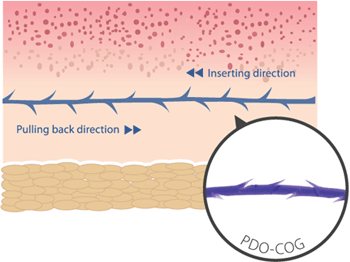
A thread lift places fine absorbable threads under the skin. The threads carry small barbs or cones that engage the tissue so it can be repositioned slightly, and they are absorbed by the body over the following months. It is a minor procedure carried out under local anaesthetic, and it sits between doing nothing and surgery — not as a replacement for either.
What it may help with
- Mild laxity along the jawline or in the mid-face.
- Early softening of the cheek or brow position.
- Mild laxity in the neck, in selected cases.
The degree of change is modest. Where there is substantial excess skin, a thread lift will not achieve what a surgical facelift would, and any clinic suggesting otherwise is overstating it. Where that is what your assessment shows, we will say so and discuss the alternatives, including referral.

Assessment and suitability
The consultation assesses skin quality, the degree and pattern of laxity, facial volume, your medical history, medication including anticoagulants, allergies and previous facial procedures. Photographs are taken and written consent is obtained. Realistic expectations are part of the assessment, not an afterthought to it.
It is not suitable during pregnancy or breastfeeding, where there is active infection or inflammation at the site, where there is significant excess skin, or where a bleeding disorder or medication makes the procedure unwise.
What usually happens
- The face is assessed, marked and photographed with you sitting upright.
- The skin is cleansed and local anaesthetic is given at the entry points.
- The threads are introduced along the planned vectors using a fine needle or cannula, and the tissue is repositioned.
- Thread ends are trimmed, and the entry points are cleaned and dressed.
- An appointment commonly takes around 45 to 60 minutes.

How many visits to expect
Usually one appointment plus a review one to two weeks later. Because the threads absorb, the effect is temporary; how long it lasts varies with the thread type, the tissue and the individual, and repeat treatment is what maintains it. Your practitioner will give you an estimate for the threads used in your case rather than a general figure.
Limitations, risks and alternatives
- Swelling, bruising, tenderness and a pulling sensation during the first days to weeks are expected.
- Dimpling or puckering of the skin can occur and usually settles; occasionally it needs adjustment.
- Asymmetry, a palpable or visible thread, thread migration or extrusion, and infection are all recognised complications.
- The effect is temporary and modest, and cannot be specified in advance.
- Alternatives include no treatment, dermal fillers where the issue is volume rather than laxity, energy-based skin tightening, or surgical facelift where laxity is substantial. A surgical opinion is the right next step for some people and we will say so.

After your treatment
Sleep on your back with your head slightly raised for the first nights. Avoid wide mouth opening, facial massage, dental treatment under general anaesthetic, saunas and strenuous exercise for the period you are advised — commonly two to three weeks. Contact the clinic if you develop increasing pain, spreading redness or fever, if a thread becomes visible or protrudes, or if a marked asymmetry appears.
Ready to talk it through?
Request an assessment and the dentist will explain which options suit you, how long they take and what they are estimated to cost.