

A bridge replaces one or more missing teeth with a fixed restoration that is supported by the teeth on either side of the gap, or in some designs bonded to a single neighbour. It is cemented in place and is not removed for cleaning.
What it may help with
A bridge can restore the appearance of a gap, help you chew on that side again, and reduce the tendency of neighbouring teeth to drift or tilt into the space. It is one of several ways to replace a missing tooth, and which one suits you depends on the gap, the neighbouring teeth and the bone underneath.

Examination and suitability
The decisive question is the condition of the teeth beside the gap. A conventional bridge is prepared into them, so they need to be strong enough to carry the load and healthy enough to justify preparing. Where those teeth already carry large fillings or crowns, using them as supports may make good sense. Where they are intact and untouched, an implant may avoid preparing them at all — your dentist will set out both.
X-rays are taken to check the roots and the supporting bone, and gum health is assessed, since a bridge is harder to clean under than a single tooth.
The main designs
- Conventional (fixed-fixed) bridge — crowns on the teeth at both ends carry a replacement tooth between them.
- Cantilever bridge — the replacement tooth is supported from one side only, used in selected situations.
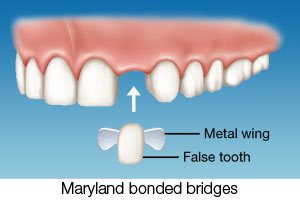
- Resin-bonded (Maryland) bridge — a wing is bonded to the back of one neighbouring tooth, preparing far less tooth structure. Useful for a single front tooth in the right circumstances.
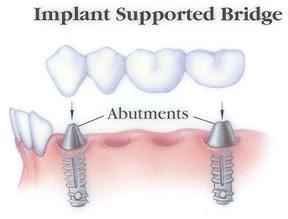
- Implant-supported bridge — support comes from implants rather than from natural teeth.

What usually happens
- Local anaesthetic is given and the supporting teeth are prepared, unless the design is resin-bonded.
- An impression or scan is taken, with the shade.
- A temporary bridge is fitted while the laboratory works.
- The bridge is tried in, checked for fit, contacts and bite, and cemented.
How many visits to expect
Usually two to three appointments over one to two weeks, depending on the design and the laboratory stage. If a supporting tooth needs a filling, root canal treatment or gum treatment first, that comes before the bridge and adds time. An estimate, confirmed after examination.
Limitations, risks and alternatives
- Preparing healthy teeth to support a bridge is irreversible.
- A bridge places extra load on its supporting teeth, which can affect them over time.
- Cleaning beneath the replacement tooth requires a floss threader or interdental brush, done daily. Most bridge failures start there.
- Decay or gum problems affecting a supporting tooth can mean remaking the whole bridge.
- A bridge has a working life that varies; it is a long-term restoration requiring maintenance and review.
- Alternatives are an implant, a removable partial denture, or leaving the gap — which is a legitimate choice for some gaps and not for others, and your dentist will say which yours is.

After your treatment
Clean under the bridge daily with the aid you are shown, and keep up regular check-ups so the supporting teeth are monitored. Contact the clinic if the bite feels uneven, if the bridge feels loose, or if the gum beneath it becomes sore or bleeds persistently.
Ready to talk it through?
Request an assessment and the dentist will explain which options suit you, how long they take and what they are estimated to cost.