

Inside each tooth, beneath the enamel and dentine, is a soft tissue called the pulp, which contains nerves and blood vessels. When the pulp becomes infected or irreversibly damaged, root canal treatment removes it, cleans and shapes the canals it occupied, and seals them. The aim is to keep a tooth that would otherwise need to be removed.
What it may help with
Root canal treatment is considered when the pulp is infected or has been irreversibly damaged. Signs can include:
- Pain on hot or cold food and drink that lingers after the source is removed.
- Pain on biting or chewing.
- Swelling of the gum near a tooth, or a recurring spot on the gum.
- A tooth that darkens compared with its neighbours.
- Facial swelling, which needs to be seen promptly.
Symptoms can also fade as the pulp dies. A tooth that stops hurting has not necessarily healed — the infection can continue quietly in the root canal system, which is why a tooth that has hurt should still be examined.
Examination and suitability
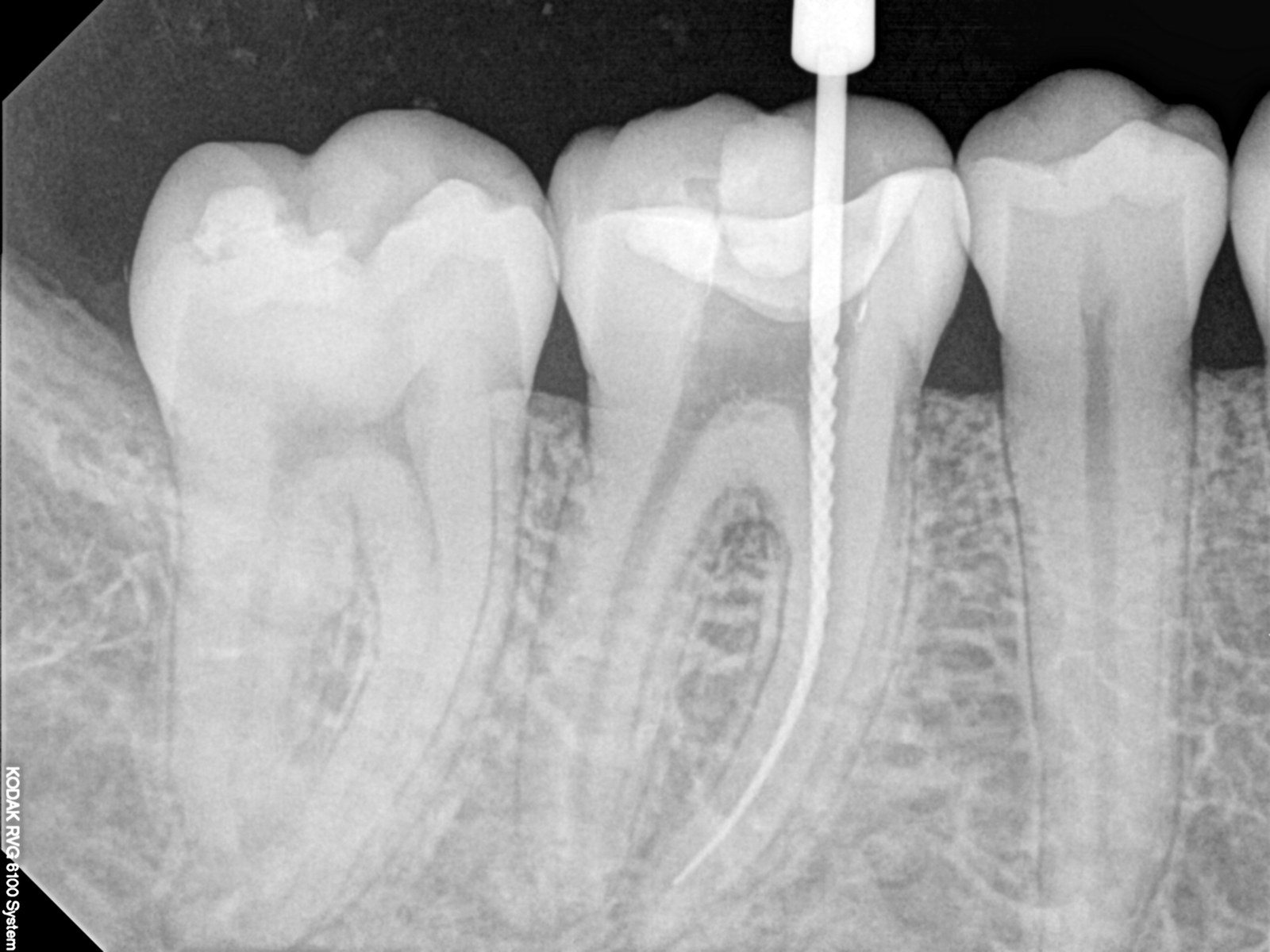
Your dentist tests the tooth and takes an X-ray to assess the pulp, the shape of the canals and the bone around the root tip. Root canal treatment is suitable where enough sound tooth structure remains to restore afterwards and the canals can be reached and cleaned.
Where a root is fractured, where decay extends far below the gum, or where the tooth cannot be restored afterwards, removal may be the more predictable option. Your dentist will explain which applies before anything is started.
What usually happens
- Local anaesthetic is given, and the tooth is isolated with a rubber dam.
- An opening is made and the pulp is removed.
- The canals are cleaned, shaped and disinfected, with X-rays taken along the way to check length.
- The canals are filled and sealed, and the opening is closed with a filling.
- The tooth is restored — often with a crown on a back tooth, because a root-treated tooth is more prone to fracture.

How many visits to expect
Commonly one or two appointments of around 60 to 90 minutes, with a separate appointment later if a crown is planned. Molars have more canals than front teeth and often take longer. An infected tooth may need a dressing left in place between visits. These are estimates; your dentist will give you a plan for your tooth after the examination.
Limitations, risks and alternatives
- Root canal treatment has a good record but is not guaranteed. A treated tooth can still develop problems, and re-treatment or removal is sometimes needed later.
- Tenderness to biting for a few days afterwards is common. Local anaesthetic is used during treatment; discomfort and recovery vary from person to person.
- A canal can be narrow, curved or calcified, which makes cleaning it harder and can affect the outcome.
- A root-treated tooth is more brittle and may fracture if it is not properly restored.
- The alternative is removal of the tooth, followed — if you choose to replace it — by an implant, a bridge or a denture. Doing nothing allows the infection to continue and is not a neutral choice.
After your treatment
Avoid chewing on the tooth until the permanent restoration is in place. Ordinary painkillers usually manage the tenderness of the first few days. Contact the clinic if swelling develops, if pain increases rather than settling, or if the temporary filling comes out.
Ready to talk it through?
Request an assessment and the dentist will explain which options suit you, how long they take and what they are estimated to cost.