
You have lost one tooth and you have two realistic ways to replace it. Both work. They fail differently, they cost differently, and only one of them fits inside a single holiday.
What each one is
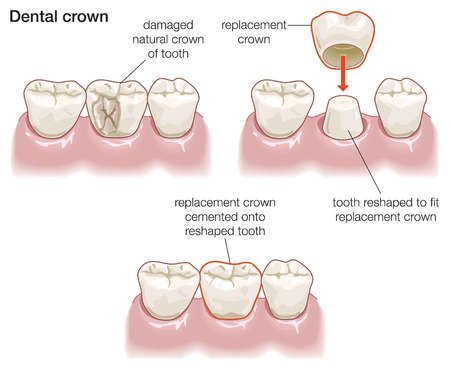
A bridge replaces the missing tooth with a false one that hangs between the two teeth either side. To hold it, those two neighbours are prepared as crowns. The whole thing is one solid piece, cemented in place.
An implant replaces the root of the missing tooth with a titanium post placed into the jaw, then a crown on top. The neighbouring teeth are not touched.
The comparison that matters
| Implant | Bridge | |
|---|---|---|
| Neighbouring teeth | Untouched | Both prepared as crowns |
| Time to finish | Two trips, 3–6 months apart | One trip, about a week |
| Bone under the gap | Preserved by the implant | Continues to shrink |
| Cleaning | Floss or brush like a normal tooth | Requires threading under the span |
| If it fails | Usually replaceable | Often takes the neighbours with it |
| Typical lifespan | Decades | Around 10–15 years |
| Upfront cost | Higher | Lower |
The argument for an implant
It leaves healthy teeth alone. If the teeth either side of your gap are untouched and healthy, a bridge means grinding down two perfectly good teeth to fix a problem neither of them has. Many patients find that the deciding fact once it is put plainly.
It keeps the bone. Jawbone stays where it is because a root is loading it. Take the root away and the bone under that gap slowly shrinks — which is why a long-standing gap may later need a graft before an implant becomes possible at all. Replacing sooner is easier than replacing later.
It fails alone. If an implant crown has a problem in fifteen years, it is one unit. If a bridge fails because one abutment tooth decays underneath it, you can lose three teeth' worth of work at once.
The argument for a bridge
It finishes on this trip. This is the real one. An implant needs three to six months of healing between placement and the final crown — see how many days you need. A bridge is prepared and fitted within about a week.
The neighbours may need crowns anyway. If both teeth either side already carry large fillings or old crowns, a bridge uses work you were going to do regardless. In that case the main objection to bridges disappears.
Bone will not take an implant. Where there is insufficient bone and you would rather not have grafting, a bridge sidesteps the problem.
Cost and medical factors. A bridge is usually less upfront. And some medical situations — uncontrolled diabetes, heavy smoking, certain medications, ongoing bisphosphonate treatment — make implant surgery a poorer bet. This is an examination question, not an internet question.
The third option people forget
A removable partial denture is cheaper again, needs no preparation of anything, and can be made quickly. Most people dislike it, but for a back tooth, on a tight budget, or as a temporary while an implant integrates, it is a legitimate answer rather than a booby prize.

Is an implant better than a bridge?
For a single gap between two healthy teeth, usually yes — it preserves bone and leaves the neighbours untouched. If those neighbours already need crowns, a bridge is a reasonable choice.
How long does a dental bridge last?
Commonly ten to fifteen years. The usual reason for replacement is decay in one of the supporting teeth, which is why cleaning under the span matters.
Can I have a bridge now and an implant later?
Yes, though the bone under the gap will have continued to shrink in the meantime, so grafting becomes more likely.
Which is cheaper, an implant or a bridge?
A bridge usually costs less upfront. Over twenty years the comparison narrows, because a bridge is more likely to be replaced at least once.
Can a bridge be done in one trip to Phuket?
Yes — preparation and fitting are normally about a week apart, so a single visit of five to seven days covers it.
Still not sure?
Tell us what is bothering you and we will explain the next steps before you book.