When a tooth is badly infected there are two honest options: clean out the inside and keep it, or take it out. Patients in pain almost always want it out. It is worth understanding what that trades away, because the tooth is not the end of the story — the gap is.
What a root canal actually does
Inside every tooth is a soft core of nerve and blood vessels. When decay or a crack lets bacteria in, that core becomes infected, and infection inside a sealed tooth has nowhere to go — which is the specific reason the pain is so distinctive.
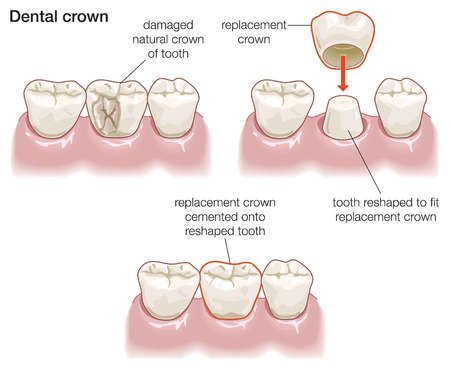
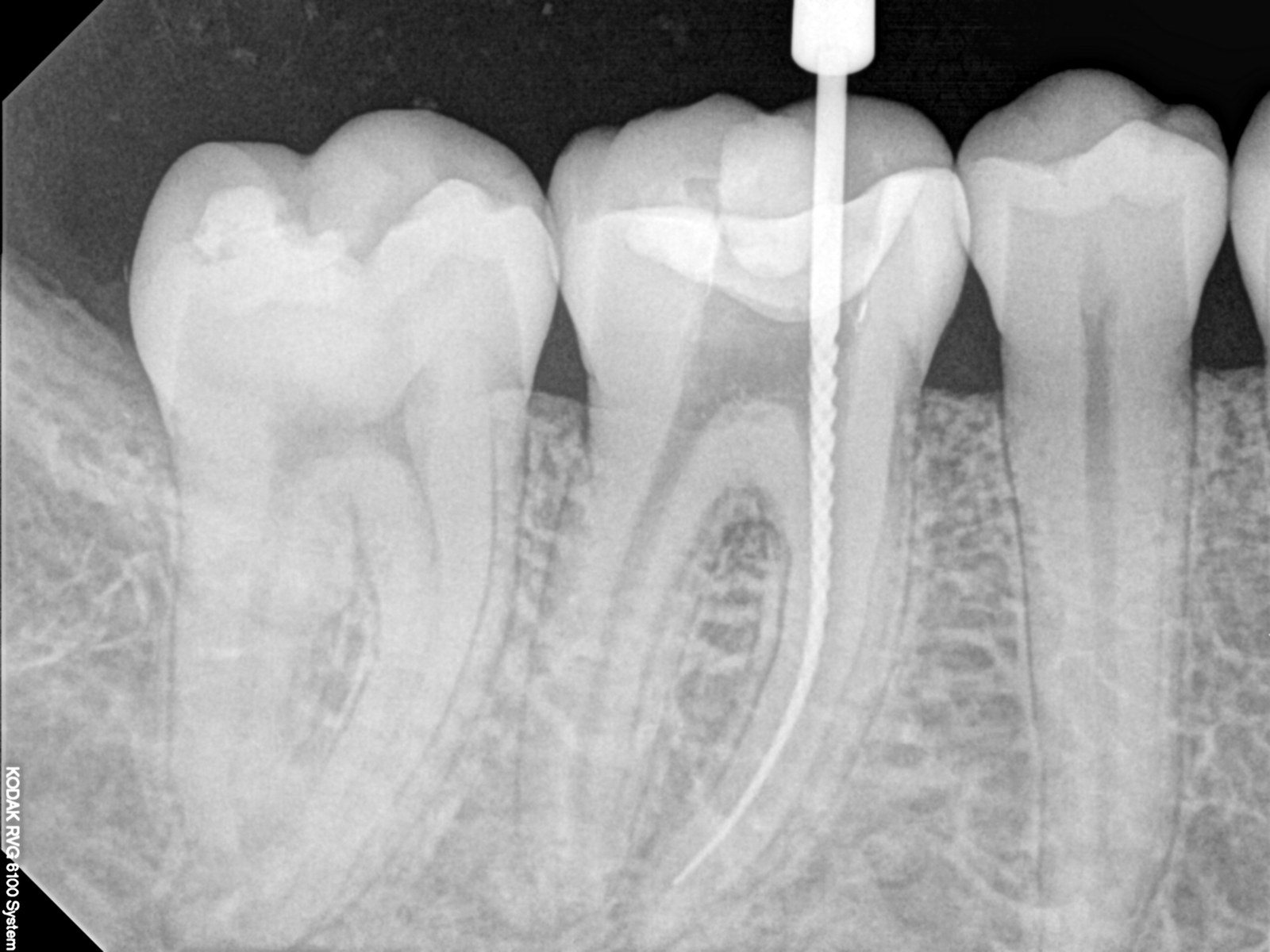
Root canal treatment removes the infected tissue, cleans and shapes the canals, and seals them. The tooth stays in your jaw and keeps doing its job. What it loses is its nerve supply, which is why it becomes more brittle over time and why a back tooth is normally crowned afterwards.
It takes one or two appointments. It is done under local anaesthetic, and the reputation it has for pain belongs to the infection, not the treatment.
When saving the tooth is the right call
- Enough sound tooth remains above the gum for a crown to grip. This is the big one.
- The root is not fractured vertically.
- The surrounding bone and gum are healthy.
- The tooth has a job to do — it is visible, or it is holding your bite up, or it will anchor a bridge.
- You would otherwise be looking at replacing it, which costs more and takes longer than treating it.
When extraction is the better call
- The tooth is split vertically through the root. Nothing repairs that.
- Too little tooth is left above the gum. A crown needs something to hold on to.
- Severe gum disease has already taken the bone that supports it.
- The tooth is not functionally needed — a wisdom tooth, or a crowded tooth in a mouth that would be better without it.
- Repeated treatment has already failed and re-treatment carries a poor prognosis.
The part that gets skipped
If you keep the tooth, budget for the crown. A root-treated back tooth without one has a meaningfully higher chance of splitting, and a split root-treated tooth cannot be saved a second time. Any quote for root canal treatment on a molar should be read together with the crown that follows it — otherwise you are comparing an incomplete treatment against a complete extraction.
If you extract, budget for the replacement: an implant, a bridge, or accepting the gap. Accepting the gap is a legitimate choice for a back molar in some mouths, but it should be a choice, not a default.

If you are on holiday
Both are same-week treatments, and pain relief is same-day. What is worth knowing:
- An infected tooth can usually be opened and drained immediately, which stops the pain even if the full treatment happens later.
- If a root canal is started here, it should ideally be finished and sealed before you fly — see flying after dental treatment.
- After an extraction, allow 24 to 48 hours before a flight, longer if it was surgical.
Is it better to save a tooth or pull it?
Save it, where the tooth is restorable. Your own tooth outperforms any replacement, and the gap costs more to deal with later than the root canal costs now.
Does root canal treatment hurt?
It is done under local anaesthetic and most patients find it comparable to having a filling. The pain people associate with it is the infection beforehand.
How long does a root-treated tooth last?
Many last decades, particularly when crowned promptly. Longevity drops significantly if the tooth is left without proper coverage.
Do I need a crown after a root canal?
On a back tooth, almost always — it takes heavy chewing forces and becomes brittle. On a front tooth it depends on how much tooth structure remains.
Can an infected tooth be treated the same day?
Relieving the pressure and the pain, usually yes. Completing and sealing the treatment may take a second appointment.
Still not sure?
Tell us what is bothering you and we will explain the next steps before you book.