
Bone in the jaw exists to hold teeth. Take a tooth away and the body, sensibly, stops maintaining the bone that held it. Within the first year after an extraction a noticeable amount of width is lost, and it keeps going slowly after that.
An implant needs bone on all sides to be stable. So if you lost a tooth ten years ago and are now thinking about replacing it, there is a reasonable chance the site needs building back up first. This is the single most common reason an implant quote goes up after the scan — and the reason we are careful about quoting from photographs.
What a bone graft actually is
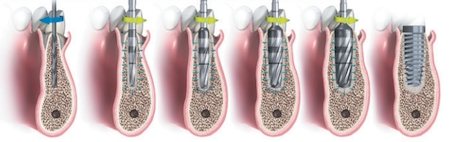
Granules of bone or a bone substitute are packed into the site and covered with a membrane. Your own bone grows into it over the following months and replaces it. The graft is scaffolding, not a permanent implant.
The material can be:
- Your own bone, taken from elsewhere in the jaw. Integrates best, needs a second surgical site.
- Processed donor or animal-derived mineral. The most common choice — sterile, well documented, no second site.
- Synthetic materials. No biological source at all.
Ask which is being used. Some patients have religious or personal reasons to prefer one, and there is almost always an alternative.
The four situations you will hear about
Socket preservation. Grafting at the same time as the extraction, to stop the collapse before it happens. If you know a tooth is coming out and an implant is likely later, this is the cheapest grafting you will ever have — ask about it at the extraction appointment, not two years afterwards.
Ridge augmentation. Rebuilding width or height where bone has already been lost. Adds months.
Sinus lift. In the upper back jaw, the sinus cavity sits close above the roots. When the bone between is too thin for an implant, the sinus floor is gently lifted and graft material placed beneath it. Common, predictable, and the one case where flying soon afterwards genuinely matters — see flying after dental treatment.
Guided bone regeneration. Grafting alongside implant placement in the same appointment, where the shortfall is small. This is the version that adds least time, because it happens during the surgery you were having anyway.
What it adds to the plan
| Extra time | Extra visits | |
|---|---|---|
| Graft with the extraction | 3–4 months before placement | None — same appointment |
| Graft with implant placement | Usually none beyond normal healing | None |
| Separate ridge augmentation | 4–6 months before placement | One |
| Sinus lift, staged | 4–9 months before placement | One |
For visitors, the version that matters is whether the graft can be done at the same appointment as the extraction or the placement. Where it can, your trip count does not change. Where it has to be staged separately, you are looking at three trips instead of two, and that is worth knowing before you book flights.
How to avoid needing one
Replace teeth sooner rather than later. That is genuinely the whole answer. The bone under a gap is at its best in the months after extraction and never improves on its own afterwards. If an implant is in your future, the cheapest year to do it is the first one.
If money or time means waiting, ask about socket preservation at the moment the tooth comes out. It is a small addition then and a large saving later.
Is it worth it?
Grafting adds cost and months, and patients reasonably ask whether to skip it and take a bridge or a denture instead. Sometimes that is the right call — particularly for a back tooth, in an older patient, or where the neighbouring teeth need crowning anyway.
But a graft is a one-off investment that makes a decades-long solution possible. Deciding against it because of the delay, and then wanting the implant in five years, means grafting a worse site.
Is a bone graft painful?
Similar to an extraction — done under local anaesthetic, with soreness and swelling for a few days afterwards. A sinus lift usually involves a little more swelling.
How long does a dental bone graft take to heal?
Typically four to six months before an implant can be placed, and longer for larger sinus grafts. Small grafts done alongside implant placement add no extra waiting.
Can I have an implant without a graft?
Often yes, if enough bone remains. The scan decides it — which is why a quote made without one may change.
What is the graft material made of?
Usually processed mineral of donor or animal origin, sometimes your own bone, sometimes a synthetic. Ask, and say if you have a preference.
Does a bone graft ever fail?
Occasionally, most often in smokers. It can normally be redone. Not smoking around the surgery makes a measurable difference.
Still not sure?
Tell us what is bothering you and we will explain the next steps before you book.


